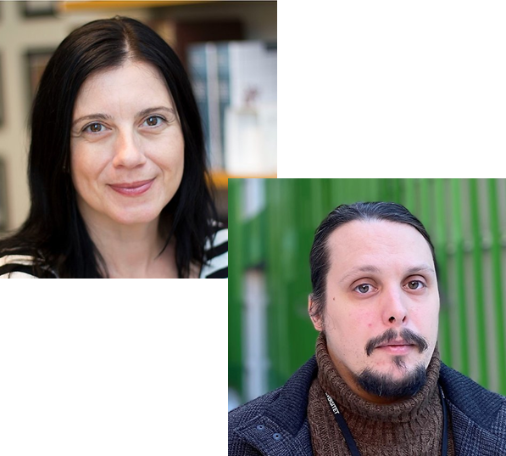
Fake journals, fake papers, fake citations: Navigating a risky publishing landscape
There is big money in scientific publishing. With Open Access, predatory publishers and fake journals emerged. Now, generative AI is fuelling paper mills that pose new threats to, and place great demands on, the peer review system. How can we uphold good publication practice and maintain research integrity in today’s landscape? Do you know how to spot a predatory journal? | | | | | WEBINAR: Navigating a risky publishing landscape
Sonja Bjelobaba and William Bülow O’Nils will explain how to identify predatory journals, why they are harmful, and why researchers sometimes publish in them, and the problem of generative AI and paper mills, outlining how fake articles are created and how they affect research integrity and trust in science.
When? 20 May 2026, 15:00
Register to join | | | | | | | | Colorectal cancer: A need for clear, respectful risk communication Effective communication about how your lifestyle affects your risk of developing cancer is key for prevention. A recent study explores the public’s perception of colorectal cancer risk and their preferences for risk communication. | | Meaningful assent matters: Children’s autonomy as right, value, and relationship Children with cancer are often asked to participate in research studies. They are often too young to consent, but they can assent to participate. But assent is not always obtained in consistent or meaningful ways. New research explores children's assent. | | | | | | Who gets priority? Severity is not enough for diagnostics
Many tests and tools used for diagnosis are expensive. The principle of severity is used in decisions about drug pricing. New research examines its use for prioritisation of between diagnostic measures. | | Mapping gaps in women’s knowledge of breast cancer risk
Different women have different risks of developing breast cancer. New research maps their understanding of the disease, its risk factors, preferences for preventive measures, and existing knowledge gaps. | | | | | | How is ethical review perceived by researchers in the social sciences and humanities?PÄR SEGERDAHL | Research involving humans requires ethical review. Ethical review is important to protect the rights and interests of research participants, and to maintain public trust [...]
| | When youth participation becomes symbolic: voices and influence in global health governanceMIRKO ANCILLOTTI | Global health discussions have, in recent years, made a point of involving young people. Conferences feature youth panels, international organisations hold youth consultations [...]
| | | | Losing a family member in an intensive care unitPÄR SEGERDAHL | An intensive care unit is a place where life is maintained with the help of advanced medical equipment. But it is also a place where life sometimes ends. In cases where it becomes clear that life-sustaining care is no longer meaningful, but should be changed to end-of-life care […]
| | | Do you dare to be fearless? PÄR SEGERDAHL |
Fear can easily play tricks on us thinking beings. When we are afraid of something, we often think that we should worry about it – so as not to lose control of it. So, to be on the safe side, we lie awake half the night thinking. We dare not let go of our thoughts, […]
| | | Taking the science of consciousness to the clinic is a collective endeavor
MICHELE FARISCO | As patients, we are used to providing samples so that the physician can make a diagnosis and prognosis and choose treatment. But it is becoming more common for physicians to order genomic tests […] | | Management control through guidelines creates complex challenges JENS LUNDEGÅRD | A vital tool for ensuring and improving quality in healthcare is clinical guidelines. Guidelines are used to support the clinicians’ memory and evidence-based decision-making, […]
| | | | | |
Jonsson, H., Hedström, M. & Grauman, Å. (2026). Women’s perceptions of breast cancer risk and prevention: insights into knowledge gaps and lifestyle attitudes. BMC Public Health, 26(1), Article ID 1238. Betti, M., Masciulli, C., Addazio, I., Ballerini, C., Bonacchi, R., Caporali, A., . . . Amato, M. (2026). Motor fatigue and fatigability in early multiple sclerosis patients: an analysis of clinical, radiological and psychological underpinnings. Neurological Sciences, 47(4), Article ID 379. Salles, A. & Farisco, M. (2026). The relevance of responsible conceptualization for ethics communication in research and innovation. In: Developments in Neuroethics and Bioethics: . Elsevier Godskesen, T. (2026). Scoping Reviews Should Describe—Not Score. Learned Publishing, 39(2), Article ID e2057. Changeux, J.-P. & Farisco, M. (2026). The Global Neuronal Workspace as a multilevel model of conscious processing. Trends in cognitive sciences Gottvall, M., Isaac, R., Ainembabazi, R., Peter-Szabo, O. & Carlsson, T. (2026). 'We need a warm hug to remind us that we are loved': a qualitative study of psychosocial health and wellbeing among lesbian forced migrants. BMC Public Health, 26(1), Article ID 778. Zarei, K., Sallin, K., Mattsson, M., Petrovic, P., Lindevall, O., Ohlis, A. & Hollander, A.-C. (2026). Long-term follow-up of individuals at risk of or who developed resignation syndrome in childhood, were granted residence permits and cared for within the Stockholm region: a register study. BMC Psychiatry, 26(1), Article ID 160. Chachignon, P., Le Barbenchon, E., Finiels, C., Martinelli, M., Dany, L. & Martin, S. (2026). Perceived changes in the self following an MBCT protocol: a qualitative study to inform further theory development. Mental Health and Social Inclusion, 30(7), 1-20 Skogeland, U., de Monestrol, I. & Godskesen, T. (2026). Balancing hope and uncertainty: family perspectives on lung transplantation in cystic fibrosis – a qualitative study. International Journal of Qualitative Studies on Health and Well-being, 21(1), Article ID 2620417. Palmryd, L., Alvariza, A., Rejnö, Å. & Godskesen, T. (2026). Losing a close person to death in ICU: A thematic analysis of bereaved family members’ experiences of end-of-life care. Intensive & Critical Care Nursing, 94(47), Article ID 104359. Sundell, E., Hedström, M., Nihlén Fahlquist, J., Viberg Johansson, J. & Grauman, Å. (2026). Colorectal cancer risk: stereotypical assumptions and competing values - a qualitative study with the general public. BMC Public Health, 26, Article ID 706. Gustavsson, E. & Juth, N. (2026). Severity as a Criterion for Prioritizing Diagnostic Measures. Health Care Analysis Martin, S., Kyosovska-Peshtenska, G., Audi, J., Zarakowska, K., Grauman, Å., Veldwijk, J., . . . Hansson, M. (2026). Preferences, attitudes and views regarding genetic newborn screening (gNBS) for rare diseases: a systematic review of the literature and synthesis from 2009 to 2022. Orphanet Journal of Rare Diseases, 21(1), Article ID 27. | About this newsletterThis newsletter is sent from the Centre for Research Ethics & Bioethics at Uppsala University. Editor: Anna Holm Bodin, anna.holm@uu.se | | | | | Läser du hellre på svenska?Nästan allt vi skriver om vår forskning finns tillgängligt på både svenska och engelska. Du kan läsa nyheter på vår hemsida eller besöka Etikbloggen.
| | | | | |