AI in healthcare: Big reward, equal risk?The potential benefits of artificial intelligence in healthcare are abundant, and so are the ethical and legal challenges. European regulation, including the EU Artificial Intelligence Act, classifies medical AI as high-risk, requiring strict standards for transparency, risk management, and human control. The challenge is not only technical, but ethical: How do we integrate AI responsibly while preserving the values that define good and fair care?
| | | | | WEBINAR: AI in healthcare
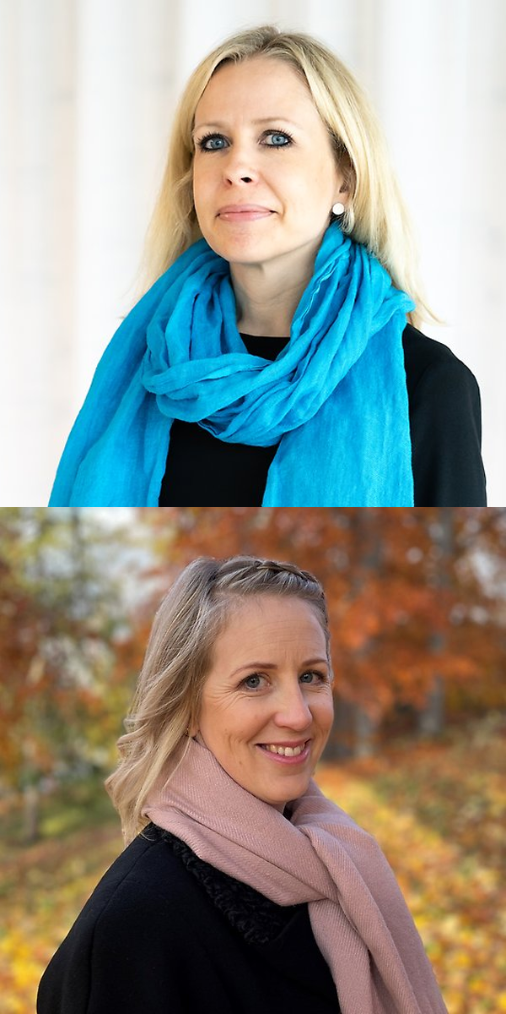
From broad ethical principles through clinical reality, Jessica Nihlén Fahlquist and Jennifer Viberg Johansson will guide us through the particularities of implementing a disruptive technology like artificial intelligence in the healthcare system, where transparency, fairness and quality are of the upmost importance. These values must guide the transition to ensure trust and patient safety and that issues of fairness, and of ensuring alternative treatment options are available when AI-based solutions fail, are not overlooked. When? 21 January 2026, 15:15
Register to join | | | | | | | | Webinar recording available | GenAI in research: What are the ethical challenges?On 15 October 2025, Sonja Bjelobaba gave a presentation on Generative AI in research and the ethical challenges involved as part of the Centre for Research Ethics & Bioethics' webinar series. GenAI in research: What are the ethical challenges?
| More recorded presentations |
Compulsory care: Conference recording available! Compulsory care brings moral, legal and professional boundaries into focus. The intention is to help, but helping means restricting someone’s freedom. A recent conference explored compulsory care and the intersection between law, ethics and practice.
| |
"The best interest of the child" in palliative care
This year, the healthcare region of Uppsala's palliative care conference focused on children and adolescents. William Bülow O’Nils addressed ethical issues in palliative care, and how to act in a child’s best interest even with no cure in sight. | | | | | | Stronger ethics support in childhood cancer care through shared responsibility
Ethics case-reflection rounds are a low-cost intervention that can reduce moral distress, improve decision-making, and strengthen patient safety. They lower staff turnover, enhance quality of care, and decrease the risk of complaints and adverse events. A big task for one person, especially fresh out of training. | | Are biomarkers of consciousness ready for clinical practice?
There is still no simple test or brain scan that can definitively determine whether someone is conscious.
Although research is making steady progress, translating advances into clinical practice remains a long and uncertain process. And one that should be approached with great care.
| | | | | |
Measuring need, not ranking suffering: Severity as a priority setting criterion in healthcareEvery healthcare system has its limitations. Decisions about resource allocation are a necessary evil. Sometimes it comes down to cost-effectiveness, other times to severity: if your condition is worse, you should be prioritised. But in what way should you be ‘worse off’ to get help first?
| | | | Unequal access to clinical ethics support accross Sweden's healthcare regionsHealthcare professionals often face ethical dilemmas in their work. Patients and their families also face ethically complex decisions. Case-based clinical ethics support can help navigate morally complex decisions, if it is available. Something the Swedish system cannot guarantee.
| | | | | | Transatlantic neuroethics conference | Caring for the human mind in the age of AI17-18 November, the Centre for Research Ethics & Bioethics (CRB) organised a conference together with two universities in Santiago, Chile aiming to create
international dialogue on AI and neuroethics. The conference focused on AI
applications in neurology, with contributions by Kathinka Evers and Manuel Guerrero. | | | | | | Can we change by seeing our mistakes?PÄR SEGERDAHL | Given how conflicts are constantly recreated, everywhere and in all areas, one might wonder if we can ever change by seeing our mistakes. We have mastered so much through new knowledge in various fields. Yet we are constantly drawn into new conflicts, despite our knowledge of the pattern. Historians have always followed intrigues, […] | | When nurses become researchers: ethical challenges in doctoral supervision
PÄR SEGERDAHL | Nurses who choose to pursue a doctorate and conduct research in the nursing and health sciences contribute greatly to the development of healthcare: the dissertation projects are often collaborations with healthcare. However, doctoral education in the field contains challenges […] | | | | | | Conditions for studies of medicine safety during breastfeeding PÄR SEGERDAHL | Reliable information on medicine safety during breastfeeding is lacking for many medications. In order to avoid the risk of harming the baby, mothers taking medication for various diseases may be advised by their doctor to discontinue the medication during breastfeeding (or the woman […]
| |
The importance of letting things take their time
JESSICA NIHLÉN FAHLQUIST | To be an ethicist and philosopher is to be an advocate for time: “Wait, we need time to think this through.” This idea of letting things take their time rarely gains traction in society. It starts already in school, where the focus is often on being able to calculate quickly and recite as many words […]
| | | | | | Can counseling be unphilosophical? LUIS DE MIRANDA | A fascinating paper by Fredrik Andersen, Rani Lill Anjum, and Elena Rocca, “Philosophical bias is the one bias that science cannot avoid,” reminds us of something fundamental, but often forgotten, about the nature of scientific inquiry. Every scientist, whether they realize it or not, […] | | How to tell if AI has feelings when it is designed to reflect human traits?MICHELE FARISCO | Debates about the possibility that artificial systems can develop the capacity for subjective experiences are becoming increasingly common. Indeed, the topic is fascinating and the discussion is gaining interest also from the public […] | | | | | | Paediatric nurses’ experiences of not being able to provide the best possible carePÄR SEGERDAHL | Inadequate staffing, competing tasks and unexpected events can sometimes make it difficult to provide patients with the best possible care. This can be particularly stressful when caring for children with severe diseases. For a nurse, experiencing situations where you cannot provide children with cancer with the best possible care (which means more than just the […]
| | Interprofessional collaboration in hospital care of patients who self-harmPÄR SEGERDAHL | Patients who are treated in hospital for self-harm can sometimes arouse strong emotions in the staff. At the same time, the patients may be dissatisfied with their care, which sometimes involves restrictions and safety measures to prevent self-harm. In addition to such tensions between patients and staff, the healthcare staff is divided into different professions […]
| | | | | |
Farisco, M., Evers, K., et al. (2026). Advancing the science of consciousness: From ethics to clinical care. Neuroscience and Biobehavioral Reviews, 180, Article ID 106497.
Taylan, F., Janhonen, J., et al. (2025). The Nordic ChiCaP
Network: An interdisciplinary approach to childhood cancer predisposition.
Rare, 3, 100111-100111, Article ID 100111.
Godskesen, T., Grandahl,
M., Hagen, A. N. & Eriksson, S. (2025). Ethical Challenges and Strategies
in Nursing Doctoral Supervision: A Systematic Mixed‐Method Review. Journal of
Advanced Nursing, Article ID jan.70298.
Bülow, W., Kihlbom, U.,
Bergström, M., Schölin Bywall, K. & Helgesson, G. (2025). Defending the
Principle of the Best Interest of the Child as the Moral Standard for
Restricting Social Contact Between Parents and Children in out-of-home Care.
Ethics and social welfare, 1-15
Perreault, M. L.,
Taylor-Bragge, R., Chneiweiss, H., Mclachlan, A. D., Gregory, T. R., Khalid,
R., et al. (2025). Indigenous
representation in neuroscience scholarship, teaching and care. Nature Reviews
Neuroscience, 26(7), 373-375
Foss, E. M., Svalastog,
A. L., Dahl, U. P. & Lepp, M. (2025). The Use of Drama for Exploring
Research Questions Within Master Theses in Psychosocial Work - A Qualitative
Study of a Pedagogical Intervention in Health and Welfare Education.
Scandinavian Journal of Caring Sciences, 39(3), Article ID e70116.
Naccache, L., Sergent,
C., Dehaene, S., Wang, X.-J., Farisco, M. & Changeux, J.-P. (2025). GNW
theoretical framework and the “adversarial testing of global neuronal workspace
and integrated information theories of consciousness”. Neuroscience of
Consciousness, 2025(1), Article ID niaf037.
Pergert, P., Svantesson,
M., Bartholdson, C., Bremer, A., Brännström, M., Fischer Grönlund, C., et al.
(2025). Case-Based Clinical Ethics Support: A Description and Normative
Discussion of Methodological Issues from the Swedish Perspective. HEC Forum
Sarhan, M. S., Antonello,
G., Weissensteiner, H., Mengoni, C., Mascalzoni, D., Waldron, L., et al.
(2025). Human mitochondrial DNA in public metagenomes: Opportunity or privacy
threat?. Cell, 188(10), 2561-2566
Martin, S., Piperkova,
A., Zschüntzsch, J., Sky, E. G., Schenk, J., Theisen, D., et al. (2025). “Code of ethical
practice” for sharing and access to personal data for AI-/ ML-based
technologies in rare diseases genetic NBS research project: a collaborative
construction in a European IMI project. AI and Ethics, 5(5), 4843-4853
Hansson, M. G.,
Björkgren, I., Svedenkrans, J., Backman, H., Hellman, J., Englund‐Ögge,
L., et al. Shaughnessy, L. (2025).
Setting up mother–infant pair lactation studies with biobanking for research
according to regulatory requirements. British Journal of Clinical Pharmacology,
Article ID bcp.70201.
Svedenkrans, J.,
Hellgren, K., Backlund, K., Perrin, N., Timby, E., Nilsson, K., et al. (2025). Determination of
prednisolone concentration in human breast milk and plasma of breastfed
infants: study protocol of a Swedish multicentre low-intervention clinical
trial. BMJ Open, 15(5), e097898-e097898
| About this newsletterThis newsletter is sent from the Centre for Research Ethics & Bioethics at Uppsala University. Editor: Anna Holm Bodin, anna.holm@uu.se | | | | | Läser du hellre på svenska?Nästan allt vi skriver om vår forskning finns tillgängligt på både svenska och engelska. Du kan läsa nyheter på vår hemsida eller besöka Etikbloggen.
| | | | | |