Children’s voices in research and healthcare: Participation, assent, autonomy
Children are central to both the research that improves their health and future, and to decisions made about their own care. But involving them in either raises complex questions about participation, decision-making, and the balance between protection and autonomy. | | | | | WEBINAR
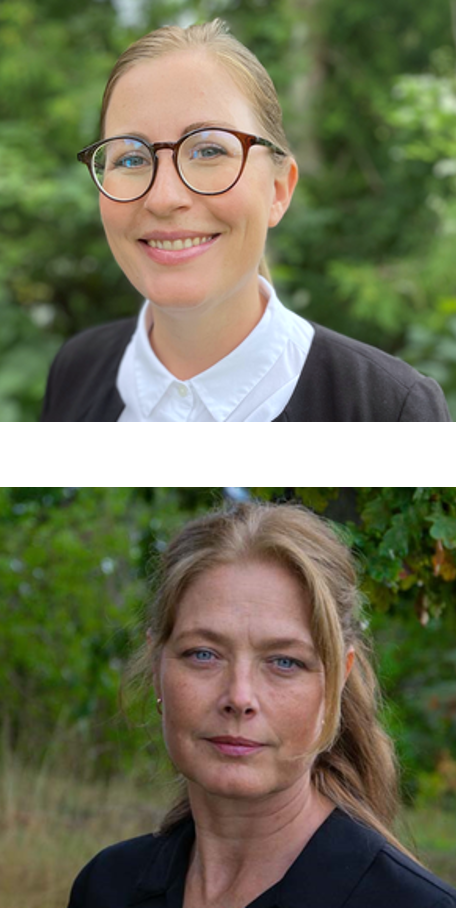
Kajsa Norberg Wieslander and Pernilla Pergert bring together perspectives from research ethics and paediatric healthcare to explore how concepts like assent, agency, and participation play out across both domains. Together, they will discuss how children's voices can be meaningfully included in research and in decisions about their own healthcare – like participating in research or deciding whether to donate stem cells to a sibling. Kajsa Norberg Wieslander and Pernilla Pergert will also explore the relationship between children, parents, and healthcare professionals, and the ethical tensions between protecting children and enabling their meaningful involvement.
When? 28 October 2026, 15:00 Register to join | | | | | | | |
Recommendations: Seriously ill children in research
The research community has a shared responsibility to promote children's participation and autonomy, ensuring that children are respected as individuals with rights of their own rather than as means to achieve research objectives. Based on Kajsa Norberg Wieslander's dissertation, this report provides evidence-informed recommendations on how to promote child-centred and ethically sustainable research practices (only in Swedish). Norberg Wieslander, K. (2026). Svårt sjuka barn i forskning – Om barns medgivande att delta i cancerforskning. Zenodo. DOI: 10.5281/zenodo.22080260 | | | | PhD position in patient preference research in amputation, prosthetics and rehabilitation
We are seeking a PhD candidate to empirically investigate patients’ experiences, preferences, and perceptions of what constitutes high-value rehabilitation following amputation. The PhD candidate will primarily conduct international preference studies using the Discrete Choice Experiment (DCE) methodology to examine how patients value different aspects of rehabilitation, such as access to care, waiting times, prosthetic device characteristics, independence, social participation, and quality of life, and how these preferences may vary across patient groups and healthcare systems.
| | | Congratulations Karl Sallin! | Precision oncology: Towards meaningful benefit for everyone Deborah Mascalzoni has contributed to the Lancet Oncology Commission on Cancer Genomics and Precision Oncology that sets out a roadmap for equitable, evidence-based and sustainable care.
| | Why research ethics should pay greater attention to third parties
Research ethics is designed to protect participants. But what happens when the people at risk aren't the participants at all?
Niklas Juth and co-authors propose practical approaches and calls for clearer guidance.
| | | | | |
Planning for gender equality in science & research
Achieving gender equality in science and research requires more than good intentions. A new book offers analytical tools that combine quantitative and qualitative approaches in a conceptual and methodological framework. | | What hinders interpreter use in childhood cancer care?
Childhood cancer does not care what language you speak. But your quality of care might depend on it. A recent study maps obstacles to accessing interpreter services across 20 paediatric oncology centres in the Nordic countries.
| | | | | |
Systematic review on culturally adapted CBT for Arabic-speakersCognitive behavioural therapy (or CBT) was developed in and for a Western context. Adaptations to cultural values, beliefs and practices make this common mental health treatment relevant for more people.
| | What are the consequences of using Facial AI in healthcare?
AI-powered facial recognition technology is being explored for use in healthcare. But what happens when our faces, a core part of our identity, are transformed into a source of medical data? Using faces as medical data raises its own set of unique ethical issues.
| | | | | |
Capturing the value of Clinical Ethics Support
Clinical ethics support is complex and practices vary. Many of its benefits are subtle psychological and social changes in a team. These are difficult to measure. A recent study explores a promising method for evaluation.
| | AI in healthcare: How to translate regulatory safeguards into practice?
Embedding legal and ethical requirements in procurement can translate regulation into clinical practice, ensuring AI tools supports safe, equitable & effective healthcare.
| | | | | |
Genetic newborn screening: Why do parents still hesitate?
Screening can help identify rare diseases early in life. But despite the potential benefits of genetic newborn screening, many parents and prospective parents remain uncertain about whether to choose it for their child. | | The ISPOR Value Flower: Better drug-pricing decisions or unnecessary complexity?
What makes a medicine worth paying for? Does the current reimbursement system capture the values at stake? A recent publication explores the ethical and practical implications of the much-debated ISPOR Value Flower. | | | | | | Health data infrastructures & continuous governance
PÄR SEGERDAHL | Health data holds great value for research and development, even long after it was originally collected. It can shed light on questions beyond those that initially motivated the collection. Therefore, data infrastructures are being established to store health data for long periods of time. Biobanks and registries keep samples and data available for researchers who […]
| The demand for knowledge and the love of wisdomPÄR SEGERDAHL | When we talk about norms, we often overlook a higher norm in human interaction. I am thinking of the norm of having knowledge, the demand to know. Why do I say that knowledge is a higher norm? Because norms presuppose our knowledge of them. If we did not know which norms apply, they would lie […]
| AI systems are only as good as the procurements that select themJENNIFER VIBERG JOHANSSON | Just over two years ago, I experienced what a healthcare procurement process can mean in practice. At the time, I was working for a company in the field of orthotics and prosthetics, and when the procurement contract was lost, the conditions for our business changed from one day to the next. The experience led me […] | |
Artificial consciousness – a look behind the hopeful facade
| PÄR SEGERDAHL | During the 20th century, it was often considered scientifically suspect to talk about consciousness or to use psychological concepts that were not defined in terms of observable behavior. For even longer periods, consciousness, or the soul, was attributed only to some humans who in turn guarded the concept very carefully so that it did not […] | The importance of children’s assent to research | PÄR SEGERDAHL | In the field of childhood cancer, care and research are closely linked. Children treated for cancer are often involved as participants in studies that can contribute to better future cancer care. It is the parents who are asked to give their consent to the child’s participation in research, but the child’s assent is also a […]
|
Autonomy consultants in healthcare?
PÄR SEGERDAHL | Patient autonomy is a fundamental principle in healthcare and medical ethics. Patients have the right to be informed about what it means to undergo a proposed treatment (as well as what it means to refrain from it) and then say yes or no to the treatment. They also have the right to decide for themselves […]
| |
Health information when knowledge gaps are already filled |
PÄR SEGERDAHL | There is something misleading about the image of knowledge gaps. We imagine the gaps as voids that could easily be filled with knowledge. The challenge is often, on the contrary, to deal with the stubborn beliefs and attitudes that the knowledge gaps are already filled with. If our knowledge gaps were as empty as those […]
| Challenges to academic diversity
PÄR SEGERDAHL | Academic work is conducted in many ways and has many functions and values. Researchers in law and astrophysics, in philosophy and oceanography, work every day with completely different tasks and methods, and the value of their contributions can hardly be compared. At the same time, academic diversity is challenged by another diversity: the many needs […] | de Miranda, L. (2026). Eudynamic bioethics. Medicine, Health care and Philosophy
Jakobsson, M., Ventovaara, H., Brostrom, E., Pergert,
P., Tiselius, E. & Jungner, J. G. (2026). Interpreter use in
Nordic paediatric oncology care: -a multicentre cross-sectional study. Acta
Oncologica, 65, 721-729
Inoue, Y. & Viberg Johansson, J. (2026). Ethics of Health Data Infrastructures:
Toward Continuous Governance and Public Trust. Journal of Medical Internet
Research, 28, Article ID e104402.
Behera, B., Ingvoldstad, C., Astrom, E., Chitty, L.
S., Crowe, B., David, A. L., . . . Hill,
M. (2026). Parent and
professional experiences of a clinical trial of prenatal and postnatal stem
cell therapy for severe osteogenesis imperfecta. European Journal of Human
Genetics, 34(8), 1176-1184
Evers, K. & Farisco, M. (2026). Is conscious AI desirable?.
Behavioral and Brain Sciences, 49, Article ID e332. Sjöstrand,
M., Juth, N., Karlsson, E. & Rahm, C. (2026). Third-Party Perspective in
Medical Research Ethics: A Case Series of Clinical Trials Involving Individuals
with Sexual Interest in Children. Journal of Bioethical Inquiry.
Driouach,
R., Badea, C. & Martin, S. (2026). A systematic review
culturally adapted Cognitive Behavioral Therapy (CaCBT) for Arabic-speaking
populations including North African subgroups. BMC Psychology, 14(1),
Article ID 1215.
Ancillotti,
M., Andersson, D. I. & Sandegren, L. (2026). When Does Evidence
Create a Moral Obligation to Depart from Antibiotic Guidelines?. American
Journal of Bioethics, 26(9), 109-111
Soller, M.
J., Luckhaus, J. L., Juran, S. & Ingvoldstad Malmgren, C. (2026). Diagnostic delay, care
needs, and trust in healthcare among persons with rare disease and their next
of kin living in Sweden. Journal of Community Genetics, 17(5), Article ID
102.
Falkenström,
E. & Selberg, R. (2026). Policy Without Necessary
Preconditions: An Analysis of Policy Documents on Swedish Preparedness in the
Healthcare Sector Before, During, and After COVID-19. Journal of
Contingencies and Crisis Management, 34(3), Article ID e70215.
Farisco, M.
(2026). The
ethical implications of using Artificial Intelligence in Disorders of
Consciousness. In: Raffone, Antonino
(Ed.), Consciousness: A Comprehensive Reference (Second Edition): (pp. 119-131). Oxford: Elsevier
Martin, S.,
Grauman, Å., Coulter, J., Hansson, M. G., Ferlini, A., Fortunato, F., . . . Veldwijk, J. (2026). What is at stake in genetic newborn
screening for rare diseases? An exploratory qualitative study of parents’ and
expectant parents’ concerns in the Screen4Care project. Public Health
Genomics, 29(1), 242-256
Colonnello,
C., Fernow, J., Luigi Marta, F. & Turco, F. (2026). Lines of flight: good
practices in MINDtheGEPs’ Gender Equality Plans. In: Cristina Solera & Manuela Naldini
(Ed.), Gender (In)equality in Research and Science: A Multilevel Analysis
across Europe (pp. 213-232). Uppsala:
Edward Elgar Publishing
Driouach,
R., Badea, C. & Martin, S. (2026). Comparing emotion
regulation, perceived discrimination, perceived social support and anxiety in
North African immigrant and native French populations. Scientific Reports,
16(1), Article ID 20549.
Clarke, A.,
Horn, R., Avram, E., Banka, S., Boardman, F., Charlton, V., . . . Forzano, F. (2026). Rare disease genomics and
justice: overview of a workshop at the Fondation Brocher, 22-24 January
2025. Journal of Community Genetics, 17(4), Article ID 82.
Martin, S.,
Grauman, Å., Coulter, J., Hasan, B., Veldwijk, J., Hansson, M. G., . . . Zschuentzsch, J. (2026). Patients' and Providers'
Attitudes Toward Artificial Intelligence and Electronic Health Record Use in
Deep Phenotyping and Rare-Disease Screening: An Empty Systematic Review.
Healthcare, 14(14), Article ID 2153.
Sandman,
L., Henriksson, M., Gustavsson, E., Lindqvist, D. & Juth, N. (2026). Cost-effectiveness,
pharmaceutical pricing and the value flower: doing some gardening.
Medicine, Health care and Philosophy
Sallin, K.
(2026). An
Examination of Resignation Syndrome with Implications for the Understanding and
Management of Culture-Bound Endemics.
(Doctoral dissertation). Uppsala:
Acta Universitatis Upsaliensis
Hidalgo, I.
R., Pisano-Gonzalez, M. M., Garcia, C. F., Schölin Bywall, K., Andersson, S. W., Avagnina, B.
& Fernandez-Feito, A. (2026). Digital health literacy
and immigrants' access to digitalized healthcare: a comparative study of Spain,
and Sweden - implications for public health policy. BMC Public Health,
26(1), Article ID 660.
Ying, G.,
Juth, N., Wanhainen, A., Lindblom, R., James, S., Fernandez Prendes, C. &
Mani, K. (2026). Endo-Bentall
Repair for Inoperable Aortic Disease: Balancing Innovation and Ethical
Responsibility. EJVES Vascular Forum, 66, 37-44
Jimenez-Moreno,
A. C., Blain, A., Pinto, C. A., Soekhai, V., Viberg Johansson, J., Dyer,
C., . . . Gorman, G. S. (2026). Patient Preferences in
Neuromuscular Diseases: Insights for Future Drug Development. JIMD Reports,
67(4), Article ID e70100.
Persson,
V., Bülow, W., Johansson, M. & Wahlberg, L. (2026). Etikprövningens relation
till den akademiska friheten. Nordisk socialrättslig tidskrift (2026 45),
39-58
Lundholm,
M., Angelin, A. & Bülow O'Nils, W. (2026). Gräsrotsbyråkraten och den
motvillige brukaren: Erfarenheter från en tidig insats med förebyggande skuldrådgivning.
Socialvetenskaplig tidskrift, 32(3-4)
Klempp,
L., Tanriverdi, N. Z., Loerbroks, A., Juth, N. & Hansson, N. (2026). Who deserves credit, who
receives credit?: A cross-sectional survey on the handling of co-authorship in
medical dissertations in Germany. Research Integrity and Peer Review, 11,
Article ID 34.
Scheer, S.,
Guerrero, M., Asaba, E., Bürk, T. & Mondaca, M. (2026). Living in Stand-by Mode
While Constructing Lived Citizenship. Journal of Immigrant & Refugee
Studies, 1-17
Marelli,
L., Colussi, I., Schlünder, I., Bahr, A., Huys, I., Krekora-Zajac, D., . . . Southerington, T. (2026). Two-faced Janus? Consent to
participate in research and consent to data processing in the EHDS era: a
comparative analysis of requirements and standards in eight European countries.
JOURNAL OF LAW AND THE BIOSCIENCES, 13(1), Article ID lsag016.
de Miranda,
L. (2026). Bioethics as
bios ethikos. Medicine, Health care and Philosophy
Siglen,
E., Ylistalo, E., Lunde, A., Tomasdottir, A., Lodahl, M., Ingvoldstad Malmgren,
C., . . . Pestoff, R. (2026). Meeting the demand: A
collaborative approach in developing genetic counselling education in the
Nordic countries [Letter to the editor]. Journal of Community Genetics,
17(3), Article ID 55.
Palmryd,
L., Godskesen, T., Alvariza, A. & Rejnö, Å. (2026). Satisfaction with
end-of-life care and self-rated health among bereaved family members: a
descriptive cross-sectional study in an intensive care context. BMC
Palliative Care, 25(1), Article ID 125.
de Miranda,
L. (2026). Can
Philosophy Help Us Create the Best of All Possible Worlds?: Introducing Global
Philosophical Health. Think, 25(72), 69-76
Farisco, M.
(2026). L’enigma
della coscienza: Cosa ci insegna il suo rapporto con il cervello?. Rubbettino
Farisco, M.
(2026). Ethical issues
identified by analyzing the attitudes of Swedish radiologists and screening
participants toward the use of AI in mammography screening. AI and Ethics,
6(3), Article ID 274.
| About this newsletterThis newsletter is sent from the Centre for Research Ethics & Bioethics at Uppsala University. Editor: Anna Holm Bodin, anna.holm-bodin@uu.se | | | | | Läser du hellre på svenska?Nästan allt vi skriver om vår forskning finns tillgängligt på både svenska och engelska. Du kan läsa nyheter på vår hemsida eller besöka Etikbloggen.
| | | | | |